Reforming EIA Governance in the European Union: Six Weaknesses and Five Recommendations
Guest Post by IAIA Member Andreea Nita
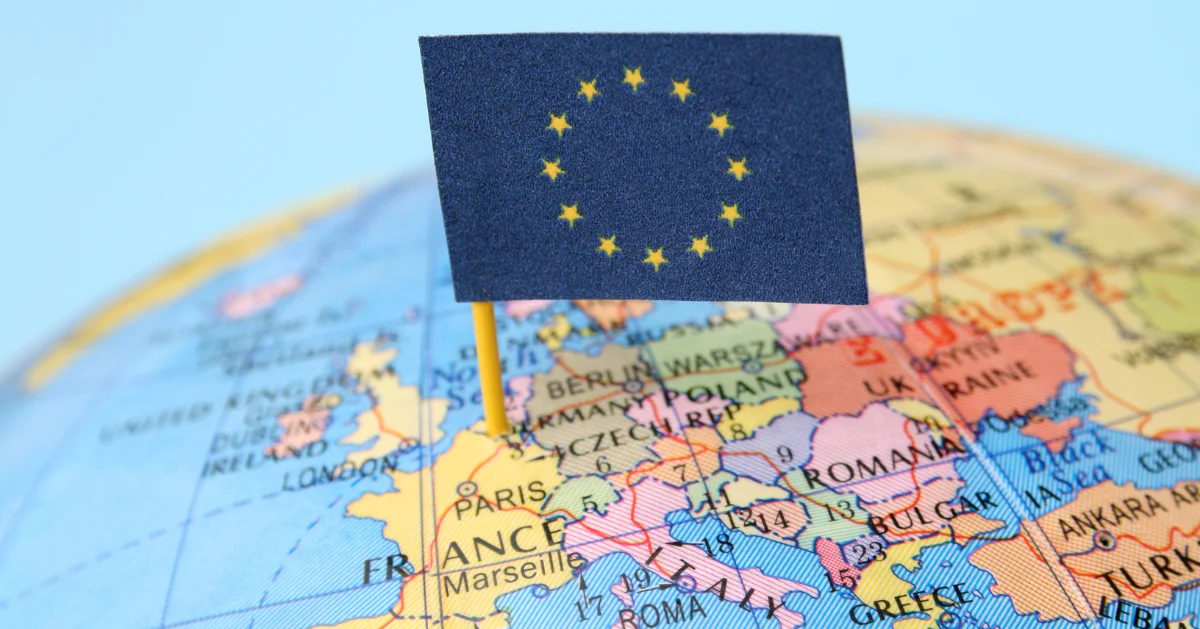
Three EU policy imperatives are converging on the same procedure at the same time. The Green Deal and REPowerEU need renewable energy and low-carbon infrastructure authorized at a pace that existing environmental impact assessment (EIA) processes were never designed for. The Taxonomy Regulation asks for EIA quality, not only EIA compliance, through its do-no-significant-harm standard. And the evaluation of Directive 2014/52/EU has opened a reform window that may not reopen for another decade.
Over the past two years, the NetDeal project has applied network science to exactly this problem. We reconstructed the stakeholder networks behind EIA procedures, mapped how EU environmental instruments overlap and where they do not, and tested how AI-assisted text analysis can read what is actually written into EIA law. The results are now condensed in a policy brief, Reforming EIA Governance in the European Union: Weaknesses Identified and Evidence-Based Recommendations, available in English, Romanian, Spanish, French, German and Italian.
This post summarizes what the brief says and where the evidence behind it comes from.
None of the six weaknesses comes from inadequate environmental standards. They come from institutional design, from governance architecture, and from a persistent gap between what the legislation intends and what procedures actually do.
Governance quality is measurable, and it varies enormously
The starting point of the brief is a simple and somewhat uncomfortable finding. When the same statistical network model is estimated on EIA procedures from different Member States, governance quality separates cleanly into measurable structure. Reciprocity of engagement, the statistical signature of genuine two-way consultation, ranged from 0.34 in a contested offshore wind procedure to 1.24 in a best-practice agri-photovoltaic case. Brokerage tells the same story from another angle: in contested procedures the developer itself controls the information paths, with broker concentration up to 0.57, while in the best procedures a neutral institution, a planning authority or a river basin body, holds a far lighter brokerage role of around 0.20.
Two further patterns matter for policy. The weaknesses are cross-layer phenomena: severe socio-economic impacts can fail to reach the assessment simply because the institutional architecture gives affected groups no pathway to the deciding authority. And governance has a temporal shape. In most procedures the engagement network contracts sharply after the decision, exactly when implementation oversight is needed. The exceptions are the cases where monitoring was co-designed with environmental organizations, and there the governance network stayed alive after approval.
Six systemic weaknesses in EU EIA governance
1. Developer-controlled information flows. In poorly governed procedures the stakeholder network takes a star form centered on the proponent. Communities cannot reach the regulatory process without developer mediation, NGOs cannot independently verify developer data, and authorities have no direct line to local knowledge. This is a structural deficit built into procedural design, and it can be measured.
2. Participation that is documented but rarely consequential. Consultation is too often reduced to notification and comment after the key scoping decisions have already been taken. Nothing in the current Directive obliges developers to respond substantively to what consultees say, so participation gets recorded without changing anything.
3. Climate integration that stops at the surface. Climate objectives sit at the center of the EU legislative architecture, yet the procedural tools of EIA have not been updated to carry them. There is no shared protocol for cumulative climate assessment or scenario analysis, and climate is still treated as a static baseline rather than a dynamic and uncertain system.
4. Assessment practice untouched by AI and digital tools. Semantic analysis of legislative coherence, automated indicator extraction and AI-assisted stakeholder mapping all exist. EU EIA practice makes almost no systematic use of them. The gap is not technological but institutional: nothing drives these capabilities into standard methodology.
5. Legislative incoherence across EU environmental instruments. The EIA Directive, the nature directives, the Water Framework Directive, the Taxonomy Regulation, REPowerEU and the Green Deal form a dense and partially overlapping system. Network analysis of their co-occurrence and indicator overlap shows real coherence gaps, most visibly between EIA harm provisions and Taxonomy do-no-significant-harm criteria.
6. Methodologies that do not travel. What is developed for energy does not transfer to transport, what works in strong regulatory contexts does not function in weaker ones, and project-by-project frameworks cannot see the cumulative effects of infrastructure clusters. Where there is no shared methodological standard, assessment quality ends up depending on the capacity of each jurisdiction.
These weaknesses reinforce one another. Developer-controlled governance keeps community knowledge out of climate assessment; legislative incoherence makes AI integration harder; methodological fragmentation perpetuates the participation gap. Reform has to address the system rather than isolated symptoms.
Five evidence-based recommendations
Each recommendation in the brief is anchored in a specific EU instrument and a verifiable target, timed for the current evaluation of the EIA Directive.
R1. Make genuine participation a structural requirement. Developers should show documented responses to consultation inputs before an EIA application is treated as complete, and scoping engagement should begin before the formal procedure does. Early bilateral engagement is the single most reliable predictor of governance quality throughout a procedure, and it leaves a verifiable trace in the consultation record.
R2. Mandate AI-assisted legislative coherence assessment. EIA reports for projects above defined thresholds should include a machine-readable assessment of alignment with the Taxonomy objectives, the relevant Green Deal instruments, the nature and water directives and national climate plans, validated against a European Environment Agency protocol.
R3. Require climate scenario analysis for energy and infrastructure projects. A climate baseline under at least two IPCC scenarios, an analysis of how those projections change the significance of identified impacts, a cumulative footprint within the regional infrastructure cluster, and an adaptation component for the operational lifetime.
R4. Build a unified EU EIA methodology framework. A common indicator architecture across the core environmental dimensions, standardized documentation protocols that make procedures comparable, a multilayer assessment structure covering physical, socio-economic, institutional and stakeholder dimensions together, and an interoperable repository for cumulative analysis.
R5. Align EIA authorizations with Taxonomy do-no-significant-harm criteria. Authorization decisions should document, substantively rather than as a checklist, how project design and mitigation address each applicable Taxonomy objective, with a governance quality threshold inside the social dimension. Structurally excluding a community from an EIA process is a social harm with direct environmental consequences, and it is measurable at the scoping stage.
What needs reform is structure, and structure can be verified.
Why this matters for impact assessment practitioners
Much of the debate on EIA effectiveness has focused on procedural detail: better reporting, clearer timelines, more consultation events. The NetDeal evidence points somewhere else. Reciprocity, broker concentration and component structure are indicators that a competent authority can compute from the consultation record it already holds. They belong in routine quality assurance next to the documentary completeness checks that exist today. For practitioners, this means that governance quality is no longer a matter of opinion. It can be diagnosed, compared across procedures, and improved on purpose.
Three cross-cutting principles run through the brief: network science as a routine diagnostic, capacity building where regulatory systems are weaker, and open, reproducible assessment under FAIR principles.
Read the full policy brief
Further reading
📖 Nita, A., Fineran, S., Fisher, W., Zamorano, M., Rozylowicz, L. (2026). Climate change impact assessment: the state of the art. Impact Assessment and Project Appraisal, 1-12.
Nita, A., Toro, M. Z., Rozylowicz, L. (2026). Improving Environmental Policies and Impact Assessments through Network Analysis for Accelerated SDG 13 – Climate Action. IOP Conference Series: Earth and Environmental Science, 1582(1), 012023.
Nita, A., Zamorano, M. (2026). NetDeal: Streamlining Environmental Impact Assessment complex networks to integrate new EU environmental policies. Research Ideas and Outcomes, 12.
Nita, A., Zamorano, M., Caro-González, A. L., Rozylowicz, L. (2025). Driving climate action: brokers as catalysts in EU policy networks. Applied Network Science, 10(1), 41.
Nita, A., Zamorano, M., Rozylowicz, L. (2025). Exploring legal frameworks for climate action: a network analysis of Green Deal, EU Directives, and environmental assessment indicators. Journal of Physics: Conference Series, 3140, 162005.
Acknowledgment
Funded by the European Union. Views and opinions expressed are, however, those of the authors only and do not necessarily reflect those of the European Union. Neither the European Union nor the granting authority can be held responsible for them.
We acknowledge the financial support of the Marie Sklodowska-Curie Actions (MSCA) Individual Fellowship under grant agreement No 101152528, research project NetDeal: Streamlining Environmental Impact Assessment complex networks to integrate new EU environmental policies.
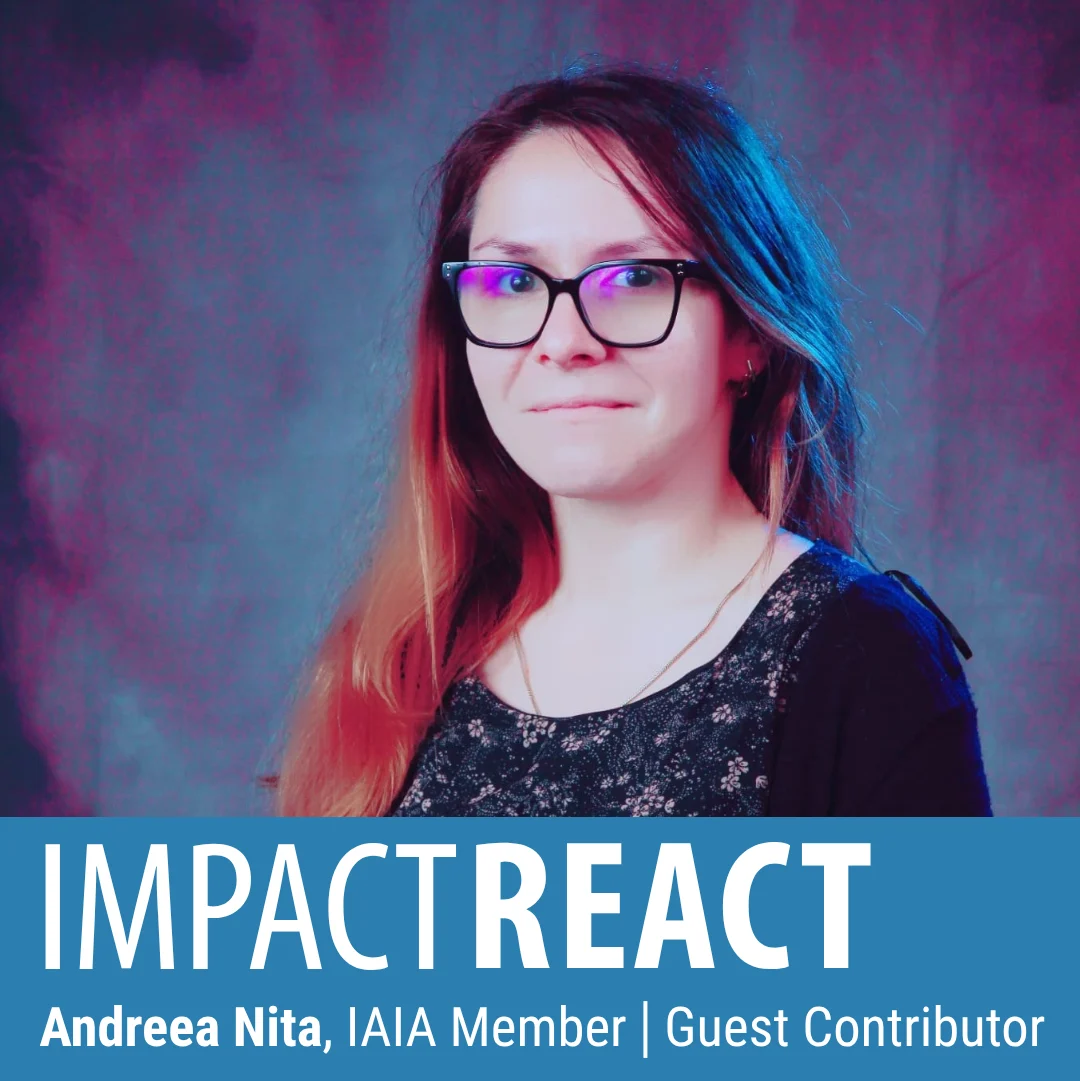
Andreea Nita is a Marie Skłodowska-Curie Actions (MSCA) Postdoctoral Fellow and researcher in environmental assessment and sustainability science. Her work focuses on climate change impact assessment, environmental governance, and the integration of biodiversity, justice, and climate considerations in impact assessment and planning. She serves as Lead Chair of the Climate Change Section of the International Association for Impact Assessment (IAIA) and as Lead Focal Point for Eastern Europe of the IUCN Commission on Ecosystem Management, contributing to international policy, professional guidance, and capacity-building initiatives.