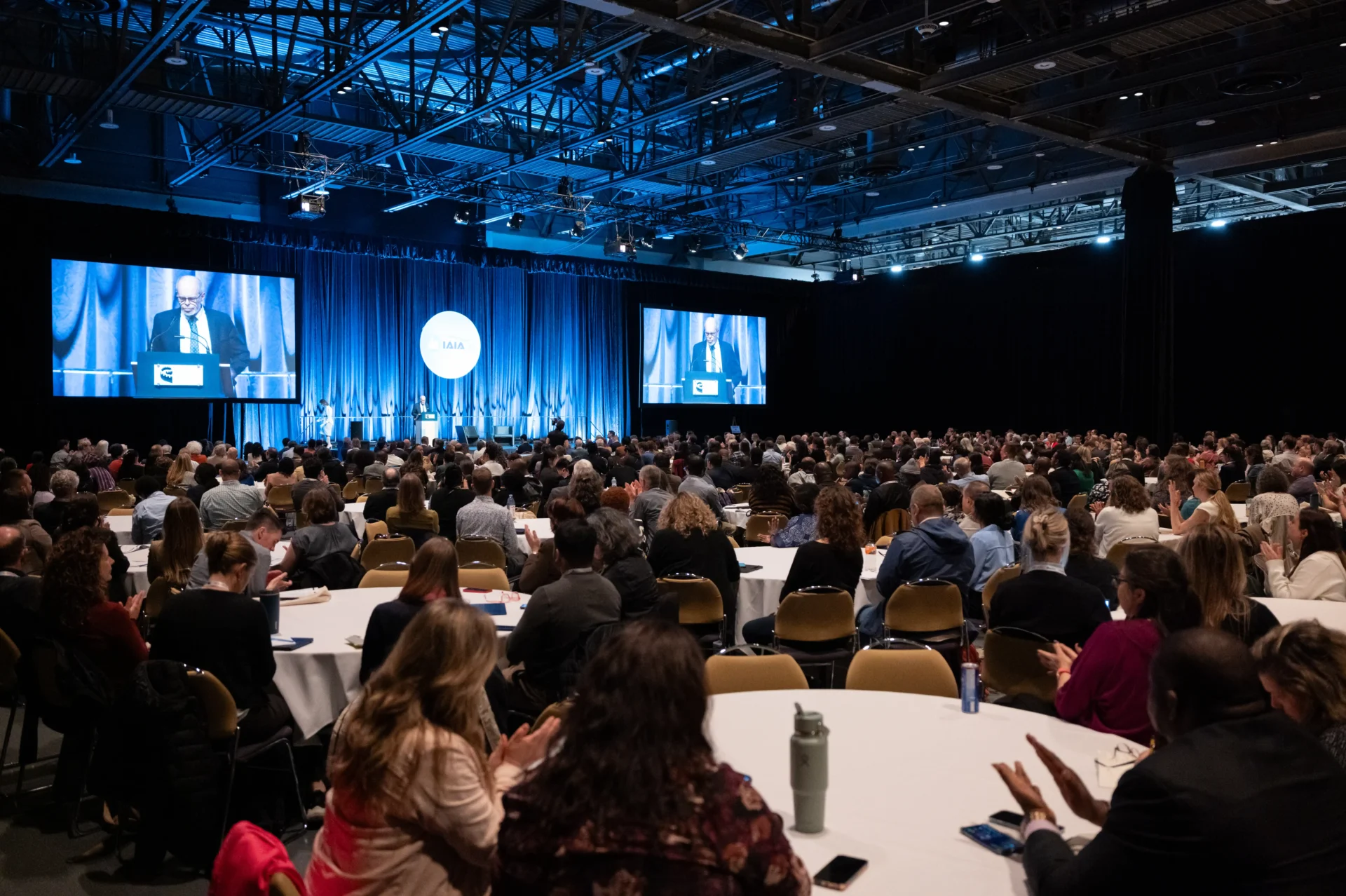
Information, Disinformation & Communication in Impact Assessment: IAIA26 Opening Plenary Speech
A message from IAIA CEO Gary Baker

Read IAIA CEO Gary Baker’s opening plenary speech from IAIA26 in Québec City, Canada. In his remarks, he reflects on the conference theme, Information, Disinformation & Communication in Impact Assessment, and the future role of impact assessment in a rapidly changing world.
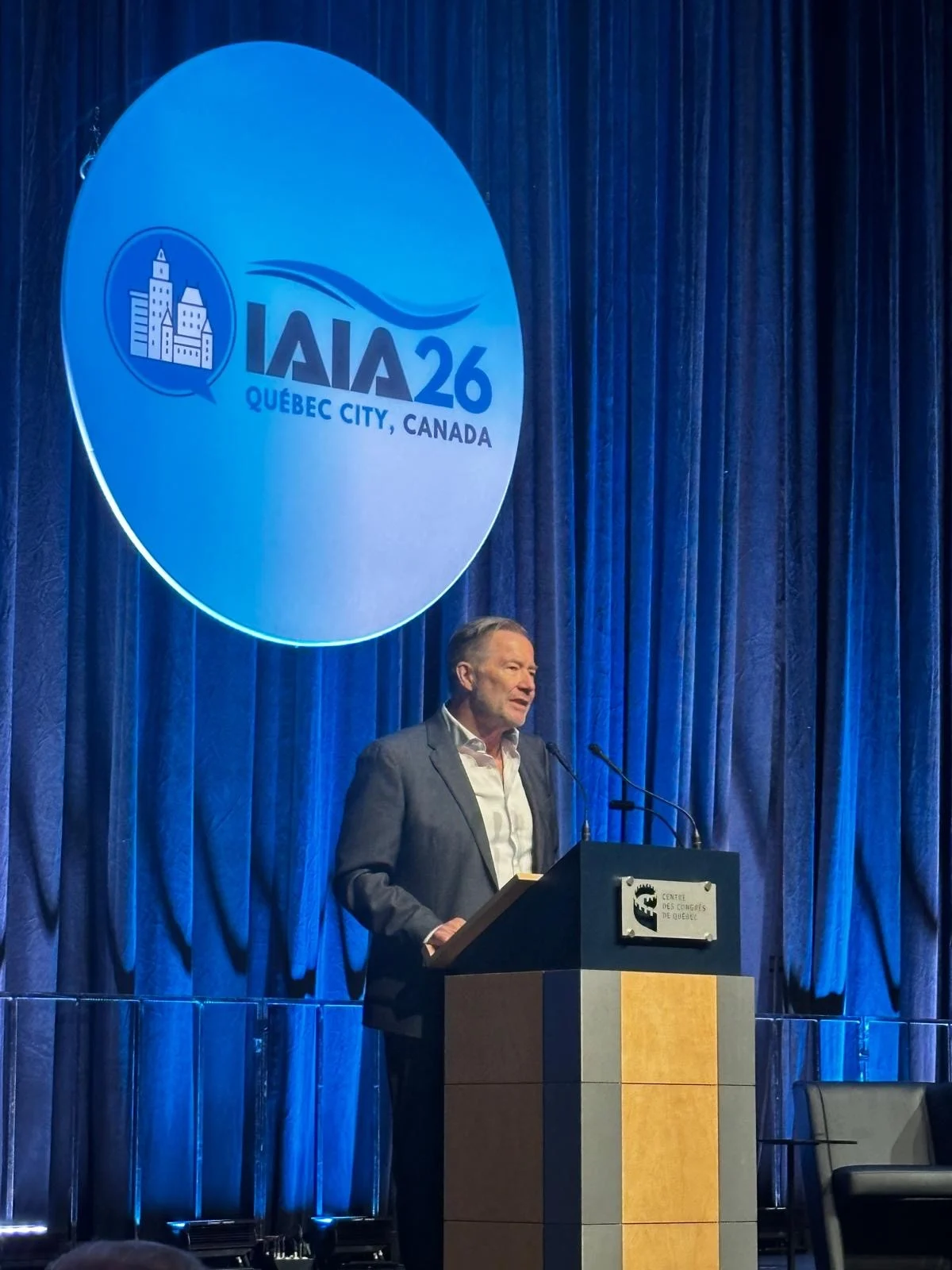
Good afternoon, everyone, and welcome.
It is a real pleasure to welcome you to this opening plenary, and to a conference built around a theme that could hardly be more timely: Information, Disinformation and Communication in Impact Assessment.
This theme goes to the heart of our profession. Impact assessment has always been about information. But the problem is this:
Information is no longer the constraint. Attention is. Trust is. Decisions are. And that changes everything.
We are operating in a world of overwhelming information abundance, accelerating AI capability, contested narratives, and blurred lines between fact, interpretation, persuasion, and disinformation.
That world is already reshaping the environment in which impact assessment operates.
For decades, our profession has built its credibility on rigour, process, and evidence. Those things still matter deeply. But we also need to recognise something uncomfortable. Rigour is no longer scarce. Data is no longer scarce. And increasingly, analysis itself is no longer scarce.
AI can already generate credible-looking assessment material in seconds: structured, referenced, persuasive, and increasingly difficult to distinguish from expert work. So the question for us is not theoretical. If anyone can generate an “impact assessment”, what makes ours matter?
Because if our answer is simply “better reports”, then we may already have a problem. The real risk is not that AI replaces impact assessment. The real risk is that impact assessment becomes commoditised. That we become very good at producing technically rigorous documents that are increasingly peripheral to actual decisions. Respected, perhaps. But ignored. And that is not why this profession exists.
Impact assessment does not exist to produce reports. It exists to shape better decisions.
That distinction matters. Because once we accept it, the measure of success changes. Success is not only methodological quality, compliance, or completion. It is influence. Relevance. Trust. Timing. Judgement. It is the ability to operate inside complex systems of competing pressures, contested evidence, and conflicting values.
In other words, the future value of impact assessment lies not in producing more information, but in helping society navigate complexity.
That is where AI becomes both a threat and an opportunity. AI will reduce barriers to entry. It will automate technical production. It will accelerate baseline work, modelling, synthesis, and scenario analysis. It will also massively increase the volume of assessment material in circulation. But it will expose something fundamental.
If impact assessment defines itself as process, AI will outperform us.
But if impact assessment defines itself by judgement, synthesis, systems thinking, ethical reasoning, stakeholder understanding, and navigating trade-offs under uncertainty, then AI becomes a powerful tool. But still just a tool. Because societies do not make decisions based on information alone. They make decisions through trust, legitimacy, values, politics, economics, emotion, and communication. And that brings us directly back to the theme of this conference.
Historically, communication in impact assessment has often been treated as the final stage: the report, the executive summary, the consultation document, the non-technical appendix. That mindset is now obsolete.
Communication is not the output of impact assessment. It is central to its effectiveness. Because if our insights are not understood, not trusted, not accessible, or not heard by decision-makers and communities, they do not influence outcomes. And if they do not influence outcomes—they do not matter. That is a hard line. But I think it is the line we need to confront.
In a world of misinformation, disinformation, polarisation, and synthetic media, the question is no longer simply: “Is our analysis technically correct?” The question is: Can trusted insight still cut through?
I believe it can. In fact, I believe impact assessment has never been more necessary.
Climate. Biodiversity. Energy transition. Equity. Water. Infrastructure. Artificial intelligence itself. These are not isolated technical issues. They are interconnected systems challenges, involving trade-offs across environmental, social, economic, political, and ethical dimensions.
That is precisely where impact assessment should thrive. But thriving will require adaptation. I see three shifts as essential.
First, we must move from being producers of reports to shapers of decisions: earlier engagement, more iterative engagement, and closer integration into real decision-making environments.
Second, we must move beyond narrow technical specialisation toward stronger systems thinking and interdisciplinary integration. The future will reward those who can connect complexity, not simply document fragments of it.
Third, we must become more confident communicators and trusted public voices. Not advocates. Not activists. But trusted interpreters of complexity in a world struggling to navigate uncertainty.
That is also where IAIA has a critical role. Not simply as a membership organisation, but as a global platform for standards, capability building, collaboration, and for defining the future identity and relevance of impact assessment itself. Because if we do not shape that future, others will shape it for us.
So let me close with the challenge. Impact assessment is not threatened because AI can generate more information. Impact assessment is threatened if we continue to define our value by the production of information.
The future of this profession will depend on whether we can demonstrate something far more important: that trusted human judgement still matters in shaping better decisions.
I believe it does. And I believe this community has an extraordinary opportunity to prove it.
Thank you.