Conflict Management in Impact Assessment: Top Five Insights
Guest Post by IAIA Member Stéphanie Belliard-Hogue
The relational challenges of the impact assessment professional
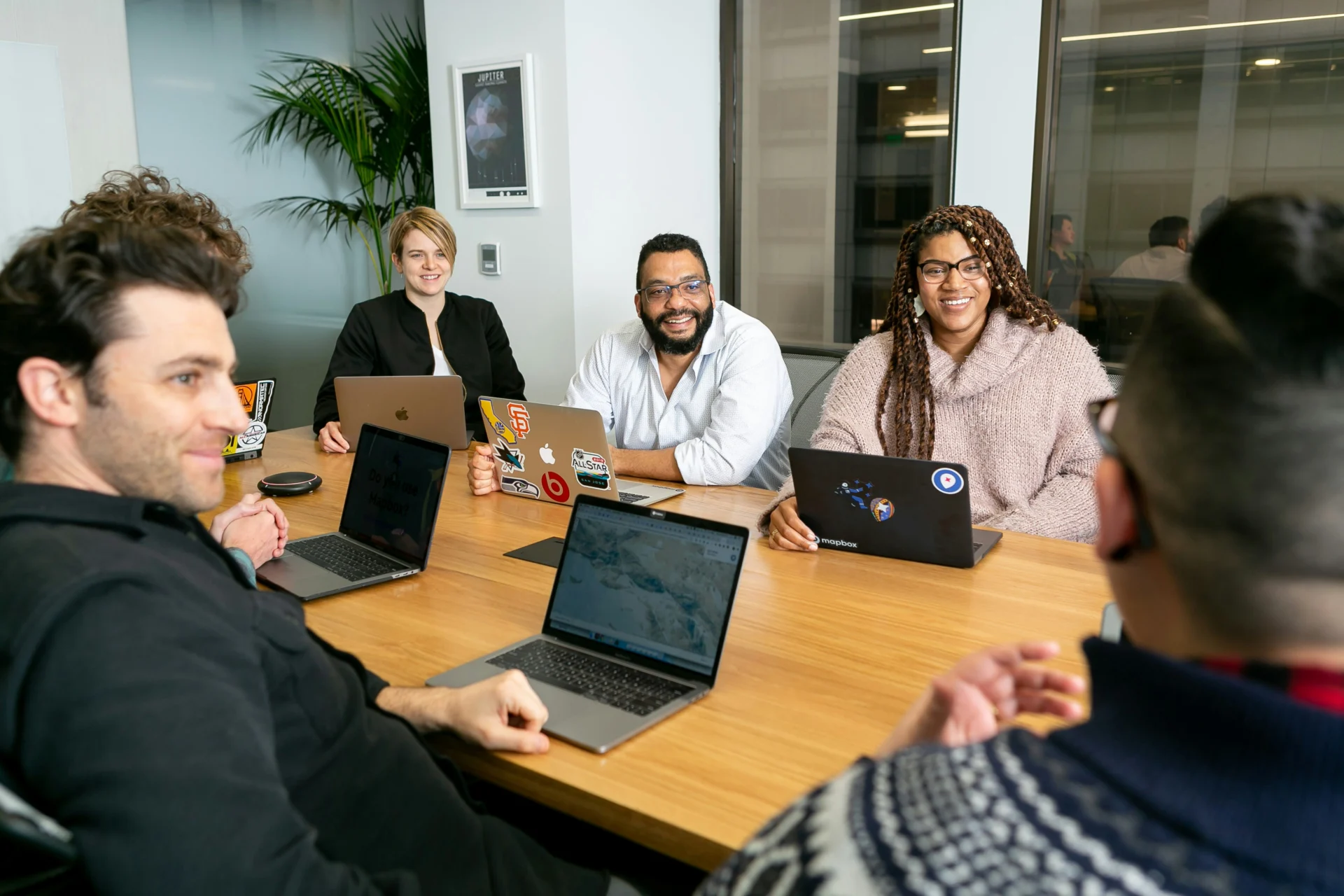
As an impact assessment professional, you interact with people and groups with multiple perspectives, interests, and backgrounds. Moreover, they come from organizations with different parameters and cultures.
Whether we are talking about the project manager, the person in charge of relations with stakeholders, a First Nation representative, a member of a local community, an organization’s leader, the scientific expert in a specific area, the person in charge of Indigenous consultations, a citizen impacted by a project, or others, they all have one thing in common: their values, personal convictions, or identity may have been shaken more than once in the context of, or prior to the impact assessment.
As a result, impact assessment and stakeholder relationships’ professionals often end up having to deal with complex dynamics: emotionally charged consultations, polarized narratives, power imbalances, constraining analysis frameworks, and fragile trust relationships.
How do we support sustainable trust relationships which lead to constructive exchanges and more inclusive solutions in such conditions?
My experience in Indigenous and public consultation
Some years ago, I was fortunate to be responsible for Indigenous and public consultations in the context of environmental assessments. This episode of my career was noteworthy in many ways.
Coming from policy development, I was first struck by an important contrast between my initial work culture and that inherent to project management. The rhythm, the structure, the ways of working and the expectations were distinct.
I also took on these duties at a defining moment on Canada’s scene: reconciliation with the Indigenous peoples was high on the political agenda. The concept of “reconciliation” being understood differently by one another, misunderstandings, and things left unsaid were plenty. It was a thorny role to be in.
Moreover, coming myself from the universe of law and humanities, I was integrating a field characterized by scientific thought: priorities, beliefs, and data which were considered valid were not the same.
Finally, I was about to complete my Third Party Neutral and conflict management coach trainings. It was important to me that my work reflect values of inclusion, equity, and profound understanding of the deep identity-based issues underlying existing tensions.
My main challenges were the following: embodying a thought system drawn from humanities in a scientific environment; representing external groups within an organization vested with decisional authority; and attempting at bringing about a conflict management culture anchored in deep dialogue in a workplace where interactions were fast paced, notably due to tight deadlines and heavy workloads.
As one can imagine, I did undergo some successes and some failures.
Through my subsequent reflections on my experience, I drew certain lessons on conflict prevention and resolution in the context of impact assessments
1. A stronger ability to understand the interests and needs underlying the positions of players in impact assessments can help mitigate tensions
Picturing an iceberg, only 10% of the elements of a conflict are visible above the surface. It can be a key asset for professionals to develop their acuity by increasing their capacity to suspend their judgement, listen with openness to consider the remaining 90%, and explore solutions which are a better fit.
This paves the way for conclusions that are more relevant and rallying.
2. Our social roles influence the way we position ourselves and show up: being aware of this can help to relativize and better juggle the various interests and reactions at play
There is a whole set of prejudices, positive and negative, attached to what we represent in the eyes of our interlocutor. As an example, when playing a role of liaison between the government and the public, we represent the State’s authority. With this comes stories, sometimes intergenerational, assumptions, fears, hopes, etc.
The way in which people depict to themselves who we are shapes how they interact with us. We also have assumptions and biases of our own, which influence — sometimes unconsciously — our own way of interpreting others’ intentions based on their roles and belonging.
People’s reactions toward us are in part about our role, and not our person. Being aware of that overlap of identities can lower the extent to which trickier interactions trigger us and the types of answers we chose to give.
3. In impact assessments, the quality of relationships with consultees is influenced by the extent to which the different types of knowledge are hierarchized, and the analysis framework is rigid
Being part of a minority group or in a position of lesser influence on the framework and the results is at best uncomfortable. Noticing that our asks are not considered or heard in a satisfactory way leaves scars and can change the nature of the relationships between various players.
Impact assessment professionals have some leeway to rebalance this situation. They can use their own area of responsibility to better represent the voices and the knowledge of people and groups who are in the shadow. This, while also considering the limits of their mandate and the readiness of their colleagues as well as of those vesting them with such mandate, to look at things from a different angle.
The “how” is important: there is a fine line to walk between becoming an ally of consultees and being seen as disloyal by one’s “group of belonging.”
4. Emotions don’t have timelines: the history of the past relationships invites itself in the current situation, and we don’t always have the possibility to address this further within the process
The existence of deep-rooted conflicts directly influences the impact assessment process of a project under review: how it is welcomed, its relevance, its success, and the type of conversations players will seek to have.
There is a tension between the tendency to circumscribe the discussion within the impact assessment’s framework so as to be efficient, and the appropriateness to address broader issues with a view to heal the relationship.
5. Showing creativity while honoring the limits and parameters given for the impact assessment is a challenge: knowing when and how to rise to it is a fine art to learn
To promote trust relationships and an inclusive approach, one would ideally be enabled to co-create or set the impact assessment’s parameters with the different players being consulted. The extent to which this can be done varies depending on the context and one ought to consider what is allowed or not.
Whatever may be the case, there is always under our control a small sphere of creativity within the set frameworks, inside which it is possible to innovate and better value each and everyone’s needs and interests. Sometimes, we even are given the opportunity to contribute to transforming those parameters: we can grasp it!
Why does the impact assessment professional benefit from acquiring tools in conflict resolution?
Tensions, missteps, callings into question, and conflicts are unavoidable. They are even more so as players involved in project’s impact assessments become increasingly interdependent.
There are many ways to react to conflicts, including for people who are interacting in this context. Some value a transactional approach focused on achieving objectives, while others resort more easily to confrontation, avoidance, obedience, or dialogue. Others still hope to nurture long term relationships and deal with sources of conflicts in depth.
Acquiring tools to better receive and deal with those different forms of dispute expression and management is very useful to go toward mutually satisfactory results.
Finally, what matters for a person or a group could be more or less well reflected following the assessment, based on, for instance: the norms surrounding the impact assessment, people in charge of conducting it, requirements of the project’s site, or criteria underlying the filtering and the use of the data collected.
This influences the feeling of being heard and the bond of trust between decision-makers and those consulted during the impacts assessment.
The impact assessment players will still have to coexist, even cooperate or collaborate after the end of the process: making conscious choices and using approaches which foster mutuality can only be advantageous for all!
Acknowledgment
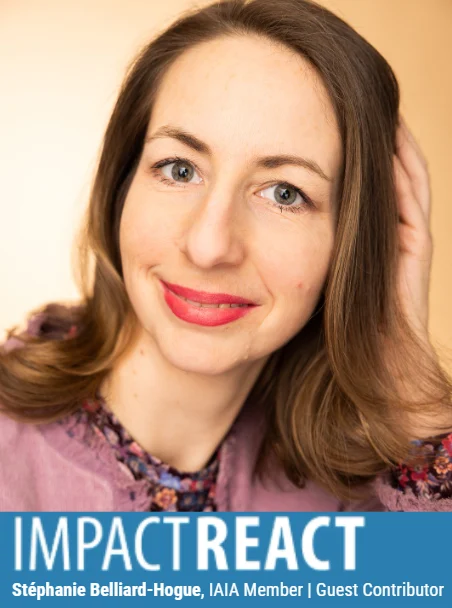
Stéphanie Belliard-Hogue is a mediator, conflict management coach, and certified neutral third party based in Quebec City. President and founder of PercoLumen – Conflict Resolution, she supports individuals, organizations, and communities seeking to transform conflictual interactions into opportunities for growth and collaboration. Trained in environmental mediation, she has over 15 years of experience in the federal public service, including public and Indigenous consultation in the context of impact assessments. As the lead trainer for the CICR’s Facilitation of groups in conflict (TPN2) module, Stéphanie trains Indigenous and civil society leaders across Canada. Conflict Resolution | Percolumen