2026 Institutional Award: Centre for Environment & Health Research & Training (CEHRT)
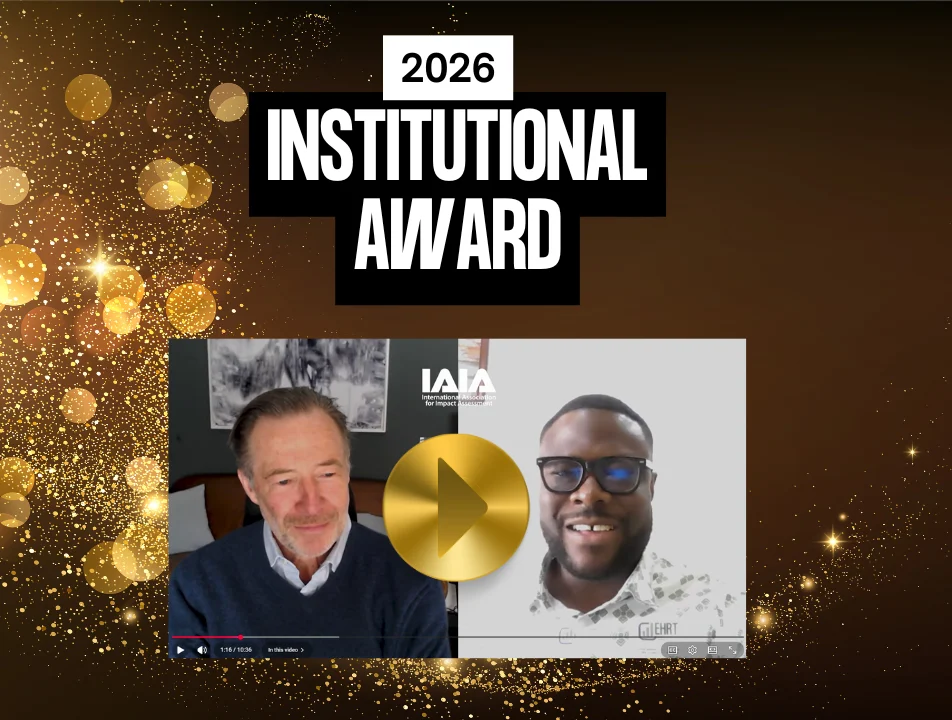
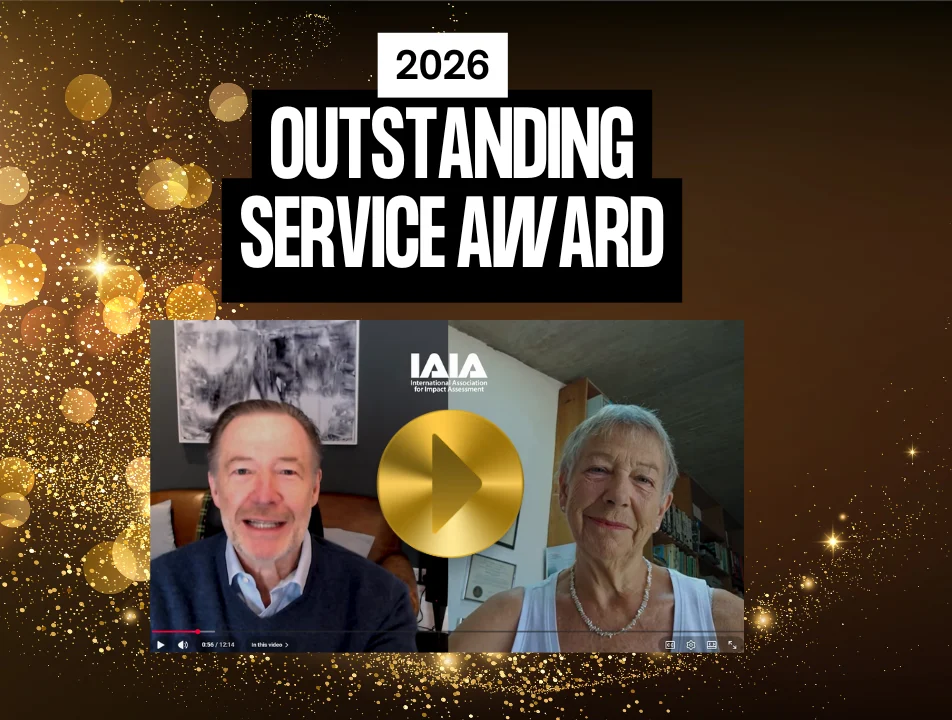
IAIA CEO Gary Baker recently sat down with Kojo Amoyaw-Osei, representing Centre for Environment & Health Research & Training (CEHRT). CEHRT is the recipient of the 2026 Institutional Award for its over two decades of ESIA consulting, training, and capacity-building in Ghana and across West Africa.
Watch the video now (and find the full transcript below).
Video Transcript
Gary Baker, IAIA CEO: Hello and welcome back to another award session. What we’re celebrating this time around is the Institutional Award, which has been awarded to the Centre for Environment and Health Research and Training — CEHRT is what I understand that they are called. I’m delighted to be joined by the Deputy CEO, Mr. Kojo Amoyaw-Osei. Now that I’ve garbled all of the names and introductions, welcome Kojo and thank you for taking some time to come on and tell us a little bit more about CEHRT. So why don’t we start with that? Congratulations on the award. It really recognizes the achievements that CEHRT has produced over the last few years. So why don’t you tell us a little bit more about what that has been?
Kojo Amoyaw-Osei, representing CEHRT: Thank you very much for this opportunity, Gary and IAIA. So CEHRT, like you mentioned, was founded back in 2004 by my father, who’s actually a former president of IAIA. So very interesting there. He was supported by his wife, my mom, and a renowned public health specialist in Ghana, Dr. Clark. And the vision of my father was to bridge the human resource capacity gap in environmental assessment and management in Ghana back then. Training was very much on his heart – that was one of his passions. So he set out to do that. And with doing that, he also needed resources to be able to train people because he wasn’t really thinking of charging for this kind of training, so then he started to do consultancy alongside the training. So the funds from the consulting basically paid for the training. Over these almost 22 years we’ve trained about 65 professionals, from master students to PhD students to young professionals, you name it — from different disciplines, from social impact assessment to environmental impact assessment within the health space as that’s what we’ve been up to these past 22 years.
Gary: Just digging into that a little bit more — how do you keep the curriculum live and up to date, given the changes in the industries that you face off against as well. What’s the process for that?
Kojo: So there’s a lot of collaboration that we have both with experts in country as well as other other experts within the IAIA fraternity. So that’s one of the ways we use to keep the curriculum current. We try as much as possible to also bring in some innovative tools — currently we’re trying to move from just the physical training that we have to a more digital version so that we could put it out there for a lot more people. You’d realize that the number of people we’ve trained over the year is not that huge. Someone would have thought, why haven’t you trained a lot more people? But this was like a hand holding exercise. We were also quite restricted with finances because if we get some consultancy work in, then we are also able to train a lot more people. So a lot of hand holding, a lot of collaboration with industry experts, and that’s basically what has helped us to keep current with the times.
Gary: As you say, the industry collaboration is there. In a lot of this work, you’re going to be facing off against government policymakers, civil servants who are in positions to be making decisions on projects. How would you sort of assess that relative training levels? Is there training required on their side as well? Is that a challenge or what?
Kojo: Yes, I think you nailed that spot on. So as part of our work, we realize, and because of all sort of consulting that we do, we realize that a lot of capacity building is also needed on that side of things with the different regulators in the space. So not just the environmental regulator — we’re talking about specific, let’s say water, the regulator for water, the regulator for forestry, because unfortunately they might not necessarily understand the impact assessment process even within the country to the level that is needed for them to be able to contribute effectively to, let’s say preparing an impact assessment for a project in that sector. So that has been one of the things that we’ve also been looking at over the past few years to try to come up with something not just for the practitioner side of things but also for the regulators and actually for other professionals. We’ve done some work with other professionals. So if I remember correctly, we’ve trained, I think, surveyors, we’ve trained engineers, so that they also appreciate where the environmental impact assessment fits in with what they do, which allows for a lot of sustainability in development.
Gary: It’s a difficult question to answer, but what is the state of sustainability and environmental concern within Ghana itself? Both at the public level and how that comes through at the government level and policy?
Kojo: I think it’s up there. We recently, just last year, passed a new Environmental Protection Act, which I know the Environmental Protection Authority did a really good job in bringing that up to speed with current regulations across the globe. There is a strong political will when it comes to that. But the training and awareness is still lacking, at least on the practitioner side of things. Compared to a few years ago, there are a lot more practitioners in the space now. We will not take all the credit for it. There have been other organizations that have also contributed to that. But on the practitioner side, a lot of it. Now, it looks like we need to focus a little bit more on the government side of things, on other professionals, as well, so that the collaboration is a bit more seamless rather than having to always try to convince the engineer why the impact assessment is important to his work as well.
Gary: Looking forward a bit, what would be the ambition — in five years’ time, where would you like to be with CEHRT? What would you like to be able to do, and what would you need to get there?
Kojo: In the future, I would say we envision a future where we are deeply entrenched in the development and excellence of impact assessment and sustainability, not just in Ghana, but in Africa, by persistently training professionals, experts, the governments in this field, and also delivering high quality consulting services. So I think that’s the kind of future that we envision for ourselves.
Gary: Brilliant. Well, that is a very good note to end on. Again, many congratulations on the award. What you’re doing, it resonates so much with me in terms of from an IAIA perspective — that capacity build on all stakeholders — it’s just such an important element of what we deal with. And I think if we’re successful in that and keep that fight going — of raising awareness, of raising skills levels and knowledge – it’s for the better for all sorts of projects and industries. So I wish you well, and hopefully we’ll find excuses to collaborate further at some point.
Kojo: Definitely. Thank you very much for the opportunity, as well. Thank you.
Gary: Thanks, Kojo.