How SEA Supports a Just Energy Transition

Each year, the International Day of Clean Energy reminds us of both the urgency and the opportunity before us: building a future where energy systems are not only renewable, but also resilient, equitable, and sustainable. Clean energy is central to addressing climate change, reducing pollution, and improving human well-being. Yet the transition is not only about technology—it is about choices, trade-offs, and impacts that ripple across societies, economies, and ecosystems.
This is where Strategic Environmental Assessment (SEA) plays a vital role.
What Is SEA and Why Does It Matter for Clean Energy?
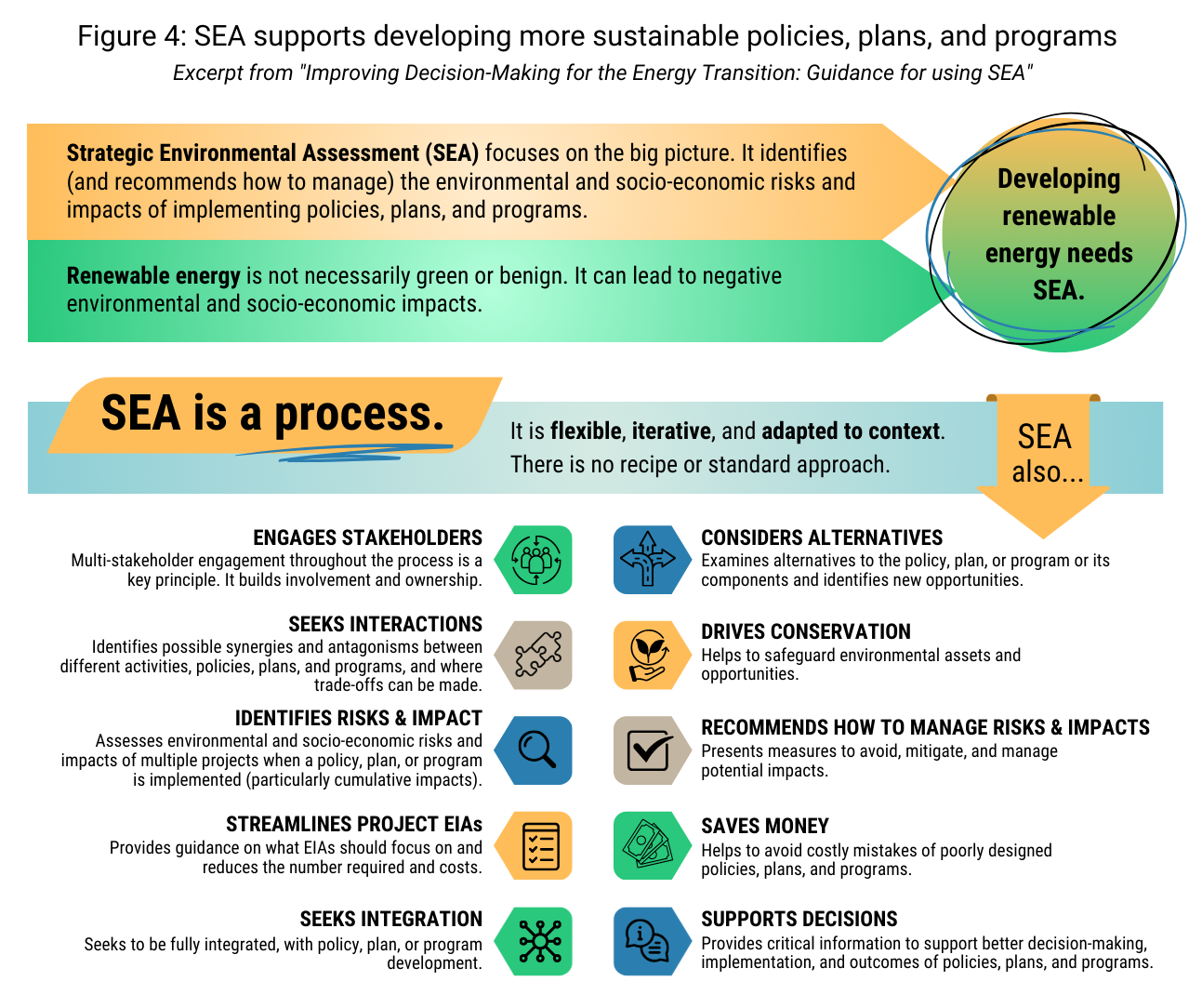
Strategic Environmental Assessment (SEA) is a forward-looking planning tool that integrates environmental and social considerations into policies, plans, and programs before they are adopted. In the context of energy, SEA helps governments and institutions look beyond individual projects—such as a single wind farm or solar installation—and instead consider the wider landscape of impacts, benefits, and cumulative effects.
For the clean energy transition, SEA ensures that decisions are:
- Inclusive – accounting for the voices of communities, especially those most affected by energy development.
- Balanced – weighing trade-offs between environmental protection, social well-being, and economic growth.
- Efficient – reducing risks, conflicts, and delays by anticipating challenges early.
- Sustainable – supporting long-term energy pathways that are climate-resilient and equitable.
IAIA’s Guidance for Using SEA in the Energy Transition
To support decision-makers worldwide, IAIA developed the open-access resource Improving Decision-Making for the Energy Transition: Guidance for Using Strategic Environmental Assessment.
This practical resource offers:
- Sector-specific insights on wind, solar, bioenergy, hydropower, geothermal, tidal, and green hydrogen.
- Considerations for coal retirement and energy supply chains.
- Tools and methodologies for stakeholder engagement, ecological assessment, and governance.
- Case studies and lessons learned from around the world.
The guidance is designed to help practitioners, policymakers, and financial institutions ensure that the shift to clean energy supports people and the planet.
Clean Energy with People at the Center
The energy transition is not just about switching technologies—it is about reimagining systems that touch every part of our lives. By applying SEA, we can ask critical questions up front:
- How will renewable energy infrastructure affect biodiversity and local ecosystems?
- What are the equity implications—who benefits, and who bears the costs?
- How can energy planning strengthen resilience to climate change and social vulnerability?
By embedding these questions into energy strategies early, SEA helps deliver a transition that is clean, fair, and future-proof.
IAIA’s Role in Advancing SEA
At IAIA, we are committed to advancing the practice of impact assessment worldwide. Our SEA Guidance reflects a global collaboration of experts and practitioners dedicated to ensuring that energy transitions deliver on both environmental and social promises.
On this International Day of Clean Energy, we invite you to explore the SEA Guidance, join the conversation, and apply these approaches in your own context. Together, we can build an energy future that is not only renewable—but also responsible.
Resources
📖 Explore the Guidance: Improving Decision-Making for the Energy Transition: Guidance for Using Strategic Environmental Assessment
🔍 Want more resources on clean energy? Check out the IAIA Resource Library.
🖼️ Get a quick visual on SEA and how it helps in the clean energy transition with this excerpt: